

Burning Smell From Your AC: What To Do In The Next Five Minutes
One of these causes is harmless and disappears in an hour. The rest are electrical. Here is how to tell them apart without gambling on it.
By Roman Shatokhin · Airo Service · Updated October 2026
If your AC smells like burning while it is cooling, turn it off at the thermostat and then at the breaker, and leave it off until a technician checks it. The usual causes are an overheating blower motor, a failing capacitor, or a burnt contactor or wire. The only harmless burning smell is dust burning off the heat strips the first time the heat runs each year.
Do this first
If you smell burning, hot plastic, or an electrical smell coming from your vents or your air handler:
- Turn the system off at the thermostat, then off at the breaker. The breaker matters — a thermostat only interrupts the control signal, and some faults sit upstream of that.
- Do not turn it back on to check whether the smell is still there. That is the single most common mistake, and it is how a repairable fault becomes a fire.
- If you see smoke, or any scorching around the unit or an outlet, call 911 first. Everything else in this article is for the situation where you smell something and see nothing.
- Then call for service. This is a legitimate reason to ask for priority response rather than an appointment next week.
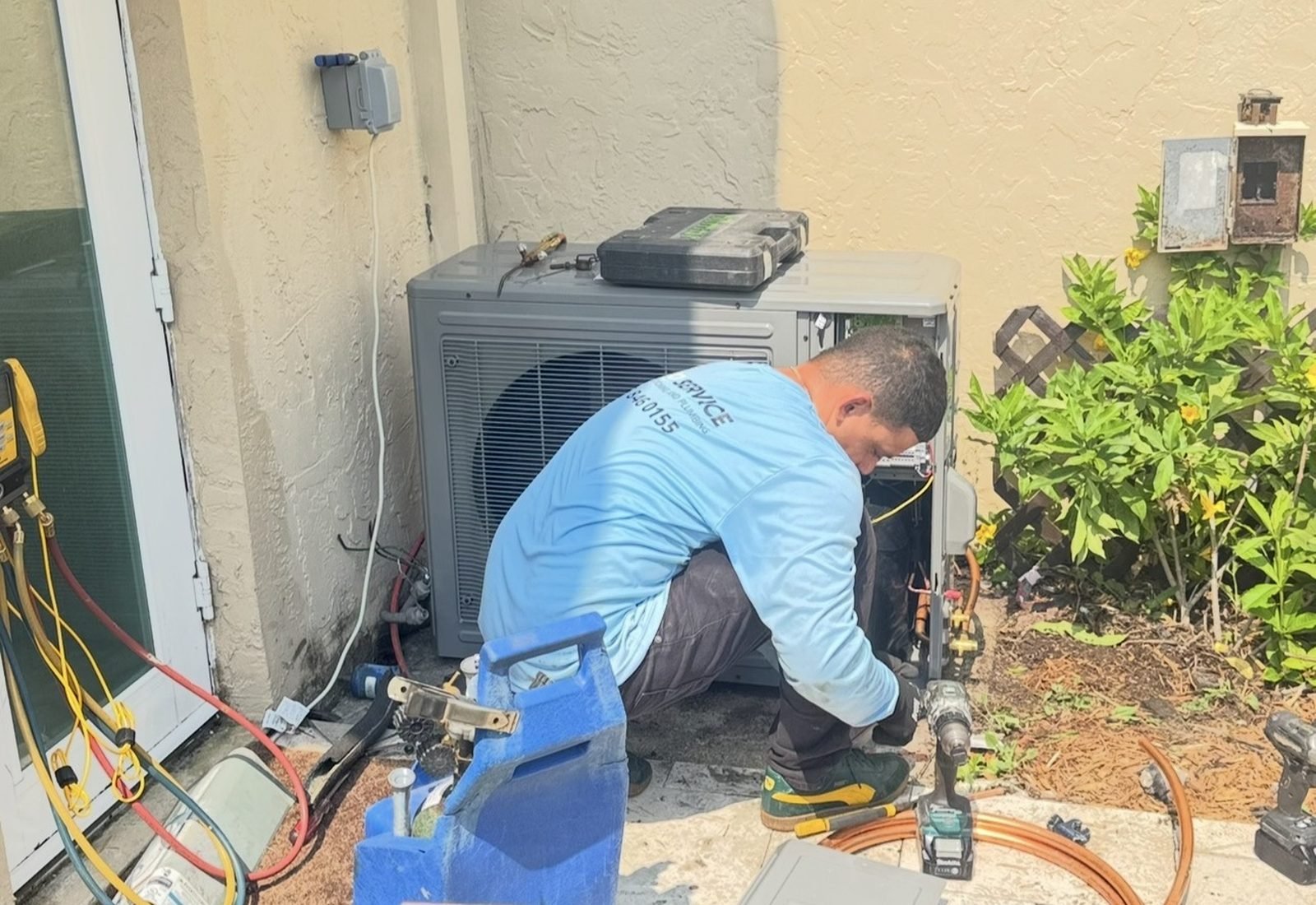
The one harmless explanation
A dusty, faintly burnt smell for the first ten to thirty minutes after the heat runs for the first time in months is normal. Dust settles on the heat strips over a long Florida summer and burns off. It fades and does not return.
In practice that gives us maybe two weeks a year when this is the likely answer, usually the first genuinely cool morning in December or January. Outside that window, a burning smell is not dust.
What the smell usually is
- Overheating blower motor. The most common cause. A motor working against restricted airflow — a filter left too long, a collapsed flex duct, a blocked return — runs hot and the windings start to smell. It usually arrives with weaker airflow and sometimes a hum or squeal.
- Failing capacitor. A capacitor going down can produce a sharp chemical or burnt-electrical smell, sometimes with a bulged top or leaked residue that is visible once a panel is off. More in capacitor failure symptoms.
- Burnt wiring or a failing contactor. Contactor points pit and arc over years of Florida cycling. Arcing melts insulation, and melted insulation is exactly what an electrical burning smell smells like.
- Seized fan motor. A motor that cannot turn keeps drawing current and cooks itself. Often paired with a hum and no fan movement — see outdoor fan not spinning.
- Heat strips staying energised. Rare here, but a stuck relay can keep auxiliary heat on while cooling runs. The tell is a hot, metallic smell alongside air that is not cold.
- Something in the duct or on the unit. A plastic bag against a return, an item set on top of the air handler in a closet, or rodent nesting material on the heat strips.
Smells that are not burning — and mean different things
- Rotten eggs or sulphur — leave the house and call your gas utility before anyone else. Natural gas is odourised to smell exactly like this.
- Musty, damp, gym-sock — biofilm on a wet evaporator coil. Not urgent, very fixable: why your AC smells musty.
- Sewage — typically a dry trap on the condensate line letting sewer gas back up, not the AC itself.
- Sweet, faintly chemical, slightly like chloroform — can indicate a refrigerant leak. Not a burning smell, but worth a call: refrigerant leak signs.
- Skunk-like — often actually a gas leak in disguise, or genuinely a skunk near the outdoor unit. Treat it as gas until proven otherwise.
What a technician will actually check
The diagnosis is mostly electrical and mostly visual once panels come off: contactor points, capacitor condition and measured capacitance, wire terminations and insulation, blower motor amp draw against the nameplate rating, static pressure across the filter and coil to see whether the motor is being strangled, and the condition of the heat strips and their limit switches.
Airflow gets checked even when the fault looks purely electrical, because a strangled blower is often the reason the electrical component failed in the first place.
What the repair usually costs
Most burning-smell repairs come down to one electrical part. These are the ranges we quote from, in writing, before any work starts:
| Repair | Typical range |
|---|---|
| Diagnostic, with repair | $0 |
| Capacitor replacement | $150–$350 |
| Contactor / relay | $150–$350 |
| Condenser fan motor | $300–$650 |
| Blower motor replacement | $400–$900 |
The full list by part is in AC repair cost in South Florida. If the breaker has been tripping as well, read why an AC breaker keeps tripping.
How much of this is preventable
Quite a lot, honestly. Capacitors and contactors are wear items that can be measured before they fail rather than after — a capacitor reading below its rated tolerance is a five-minute replacement at a maintenance visit and an emergency call in August. Restricted airflow, which is behind most overheating-motor cases, comes down to filter discipline and duct condition.
What is not preventable is age. Wiring, terminals and insulation in a Florida attic live a hard life, and at a certain point the honest answer is that the electrical side of an old air handler is telling you something about the whole machine.
The part worth repeating
Nobody regrets shutting a system off for a few hours. Plenty of people regret running it one more evening to get through the heat. If it smells electrical, kill the breaker and let someone look at it.
Frequently Asked Questions
Should I turn off my AC if it smells like burning?
Yes, immediately — at the thermostat and then at the breaker. A thermostat only interrupts the control circuit, and some electrical faults sit upstream of it. Do not switch it back on to test whether the smell has gone.
Is a burning smell from the AC always an emergency?
Almost always worth treating as one. The single benign exception is a dusty burnt odour during the first heating run of the season, which fades within half an hour and does not come back. Any electrical, plastic or persistent burning smell during cooling needs a technician.
What causes an electrical burning smell from air conditioning vents?
Most often an overheating blower motor working against restricted airflow, a failing capacitor, or arcing at a pitted contactor melting nearby wire insulation. Less commonly a seized fan motor or heat strips energised when they should not be.
My AC smells like rotten eggs, is that the air conditioner?
Probably not. Natural gas is deliberately odourised to smell of rotten eggs or sulphur, so leave the house and call your gas utility first. Once gas is ruled out, a sewage-like smell is usually a dry condensate trap letting sewer gas back through.
Can regular maintenance prevent this?
Much of it. Capacitors, contactors and wire terminations are wear items that can be measured and replaced before they fail, and most overheating-motor cases trace back to restricted airflow from an overdue filter or a duct problem. An annual visit catches the majority of these while they are still cheap.
Why does my AC smell like burning when it is on?
During cooling, a burning smell almost always means an electrical part is overheating: the blower motor, a capacitor, a contactor or a wire connection. Turn the system off at the breaker and have it checked before running it again.
What does a burning smell from the AC vents in the house mean?
The vents carry air straight from the air handler, so the smell usually comes from the blower motor or the wiring inside it. If it appears only the first time the heat runs after summer and fades within half an hour, it is dust burning off the heat strips.
Can a dirty air filter cause a burning smell?
Indirectly, yes. A clogged filter starves the blower of air, the motor runs hot and its windings start to smell. Replace the filter, but still have the motor checked if the smell was electrical — an overheated motor is often already damaged.
How much does it cost to fix an AC that smells like burning?
Usually one electrical part: a capacitor or contactor runs $150–$350, a condenser fan motor $300–$650 and a blower motor $400–$900. The diagnostic is $0 when you go ahead with the repair.
Burning Smell? Do Not Wait On It
Shut the system off at the breaker and call us. Priority response across Miami-Dade, Broward and Palm Beach — emergency service available.
- ✔ Free, No-Obligation Estimate
- ✔ Upfront Written Pricing — No Surprises
- ✔ 10-Yr Parts / 1-Yr Labor Warranty
- ✔ Serving Miami-Dade, Broward & Palm Beach
Prefer to talk? Call (305) 846-0155.