

Why Your AC Smells Musty in South Florida (And What Actually Fixes It)
That damp, gym-sock smell when the air kicks on is almost never the ductwork. Here is where it really comes from and what stops it coming back.
By Roman Shatokhin, Owner & HVAC Specialist · Florida HVAC license #CAC1824778 · Updated August 2026
The smell is coming from the coil, not the ducts
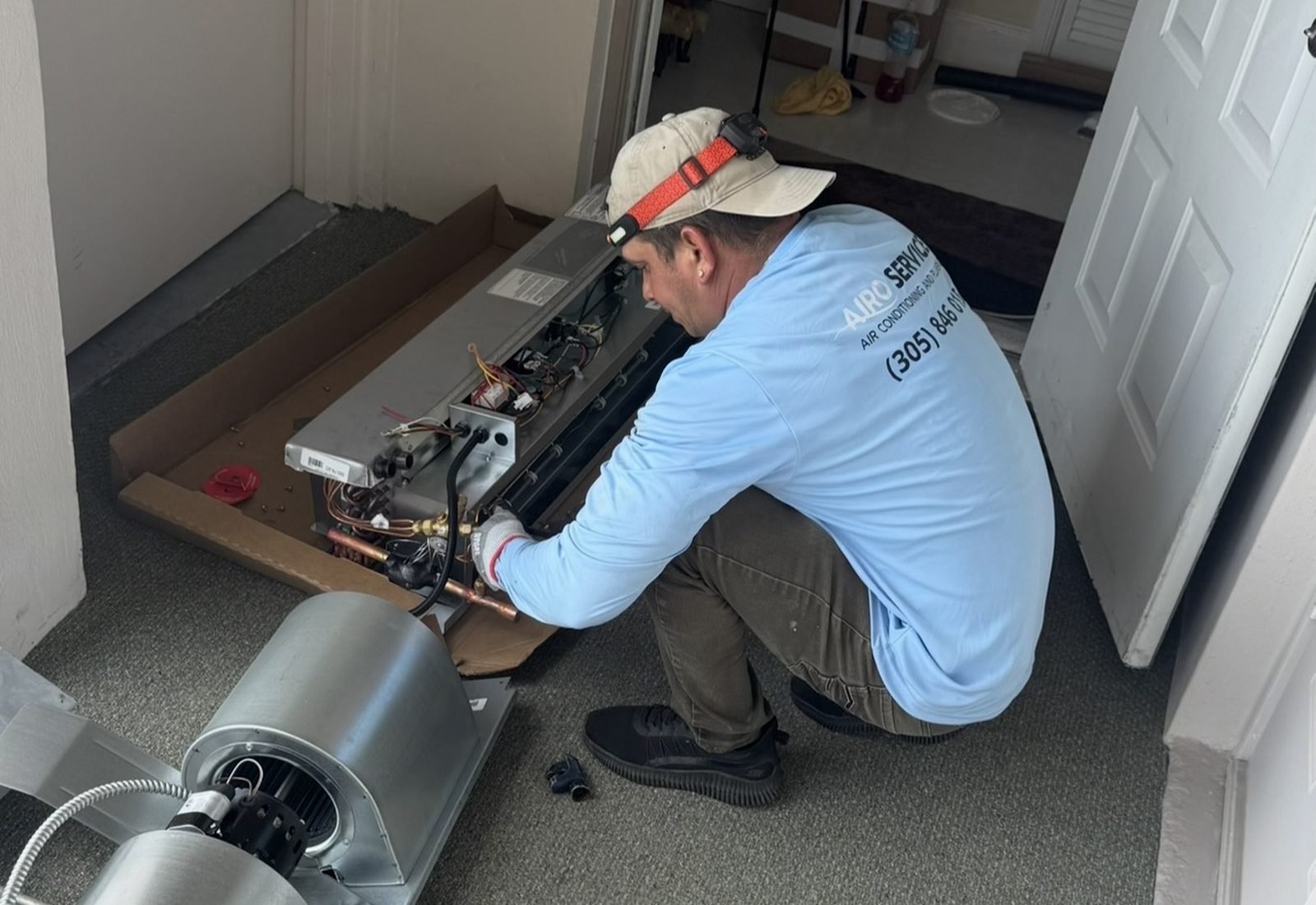
Nine times out of ten, a musty smell in a South Florida home starts at the evaporator coil inside your air handler. That coil runs cold and wet for most of the year. Every cooling cycle pulls moisture out of the air and it condenses on the fins. Dust, skin cells and pollen ride the same airflow and stick to that wet metal, and what forms is a thin biological film — the same thing that makes a forgotten towel smell.
People call it “dirty sock syndrome,” and it is usually strongest in the first minute after the system starts, then fades. That timing is the giveaway: the blower is pushing air across a coil that has been sitting damp and still.
Why South Florida makes it worse
Two local conditions turn a minor problem into a recurring one. First, humidity: the coil almost never gets a chance to dry out, because the shoulder seasons that let northern systems sit idle for months do not exist here. Second, oversizing. An AC that is too large for the house satisfies the thermostat quickly, shuts off, and never runs long enough to drain the moisture it just condensed. The room ends up cool and clammy, and the coil stays wet between cycles.
If your system blasts cold for eight minutes and shuts off, then repeats all afternoon, that short cycling is very likely feeding the smell.
What does not fix it
Duct cleaning is the most common thing homeowners buy for this problem, and on its own it usually disappoints. If the source is the coil and the drain pan, scrubbing the ducts removes dust but leaves the smell generator untouched. It comes back within weeks.
Scented filters and vent inserts are worse — they cover the odour for a few days and tell you nothing. And a filter with too much resistance can reduce airflow across the coil, which makes it colder, wetter and more prone to the exact problem you are trying to solve.
What actually fixes it
- Clean the evaporator coil properly. Not a spray-and-walk-away. The coil is opened up, treated with a suitable cleaner and rinsed, and the drain pan is cleared and flushed.
- Fix the drain path. A pan holding standing water because the line is partially blocked or has no fall to it will smell no matter how clean the coil is.
- Address short cycling. If the unit is oversized, longer low-speed run cycles remove far more moisture. On an existing system that can mean adjusting fan settings; at replacement time it means sizing from an actual load calculation instead of copying whatever was there before.
- Then, and only then, look at the ducts. If there is real contamination or a moisture intrusion in the duct run, cleaning or sealing is worth doing — after the coil is ruled in or out.
- Consider UV where it fits. A correctly placed UV lamp aimed at the coil keeps biofilm from re-establishing. It is a maintenance aid, not a substitute for cleaning a coil that is already fouled.
When the smell is not musty
Trust your nose on these, because they are not the same problem:
- Burning or hot electrical smell — shut the system off at the breaker and call. Do not keep running it.
- Rotten eggs — leave the house and call your gas utility first.
- Sewage — often a dry P-trap on the condensate line letting sewer gas back through, not the AC itself.
- Sweet, faintly chemical — can indicate a refrigerant leak; it needs a licensed tech, not a deodoriser.
The honest maintenance answer
Rooms that smell every summer usually belong to systems that get serviced every second or third year. In this climate the coil, the pan and the drain line are the three things that reward a scheduled visit more than anything else on the machine. Get them cleaned before cooling season rather than after the smell arrives, and the problem mostly stops being an annual event.
Frequently Asked Questions
Is a musty AC smell dangerous?
The smell itself is usually a biological film on a wet coil rather than an immediate hazard, but it is a signal that moisture is sitting somewhere it should not. Persistent damp inside an air handler or duct run can lead to mould growth, which does matter for people with asthma or allergies. A burning, sewage or rotten-egg smell is a different matter and should be treated as urgent.
Will duct cleaning get rid of the smell?
Usually not on its own. If the source is the evaporator coil or a wet drain pan — which it normally is — cleaning the ducts removes dust but leaves the cause in place and the smell returns. Duct cleaning is worth doing when there is genuine contamination in the duct run, after the coil and drain have been checked.
Why does it only smell for the first minute?
Because the blower is pushing air across a coil that sat damp and still while the system was off. Once airflow dries the surface slightly the odour fades. That first-minute pattern is the classic sign the coil is the source.
Can an oversized AC cause the smell?
Yes, indirectly. An oversized system reaches setpoint fast and shuts off before it has removed much moisture, so the coil stays wet between short cycles and the house stays humid. Correct sizing and longer, slower run cycles are a real part of the fix.
How often should the coil be cleaned in South Florida?
For most homes here, inspect it every year and clean it as needed — annually is common for coastal or pet households, every other year for lower-use systems. Equipment here runs close to year-round, so intervals that are generous up north are merely adequate in Miami-Dade, Broward and Palm Beach.
Get the Smell Diagnosed Properly
We find the source instead of masking it. Fast response — often same-day.
- ✔ Free, No-Obligation Estimate
- ✔ Upfront Written Pricing — No Surprises
- ✔ 10-Yr Parts / 1-Yr Labor Warranty
- ✔ Serving Miami-Dade, Broward & Palm Beach
Prefer to talk? Call (305) 846-0155.