

Mini-Split or Extend the Central AC? Cooling an Addition or Garage
Adding a room to an existing duct system is the intuitive choice and often the wrong one. Here is how the decision actually goes.
By Roman Shatokhin · Airo Service · September 2026
The question behind the question
When someone asks about cooling a new space, the real question is usually: can my existing air conditioner just handle one more room?
Sometimes. But three things have to be true at once: the system has spare capacity, the duct system can physically deliver more air without robbing existing rooms, and the new space is not a wildly different load from the rest of the house. In converted garages and enclosed patios, all three are frequently false.
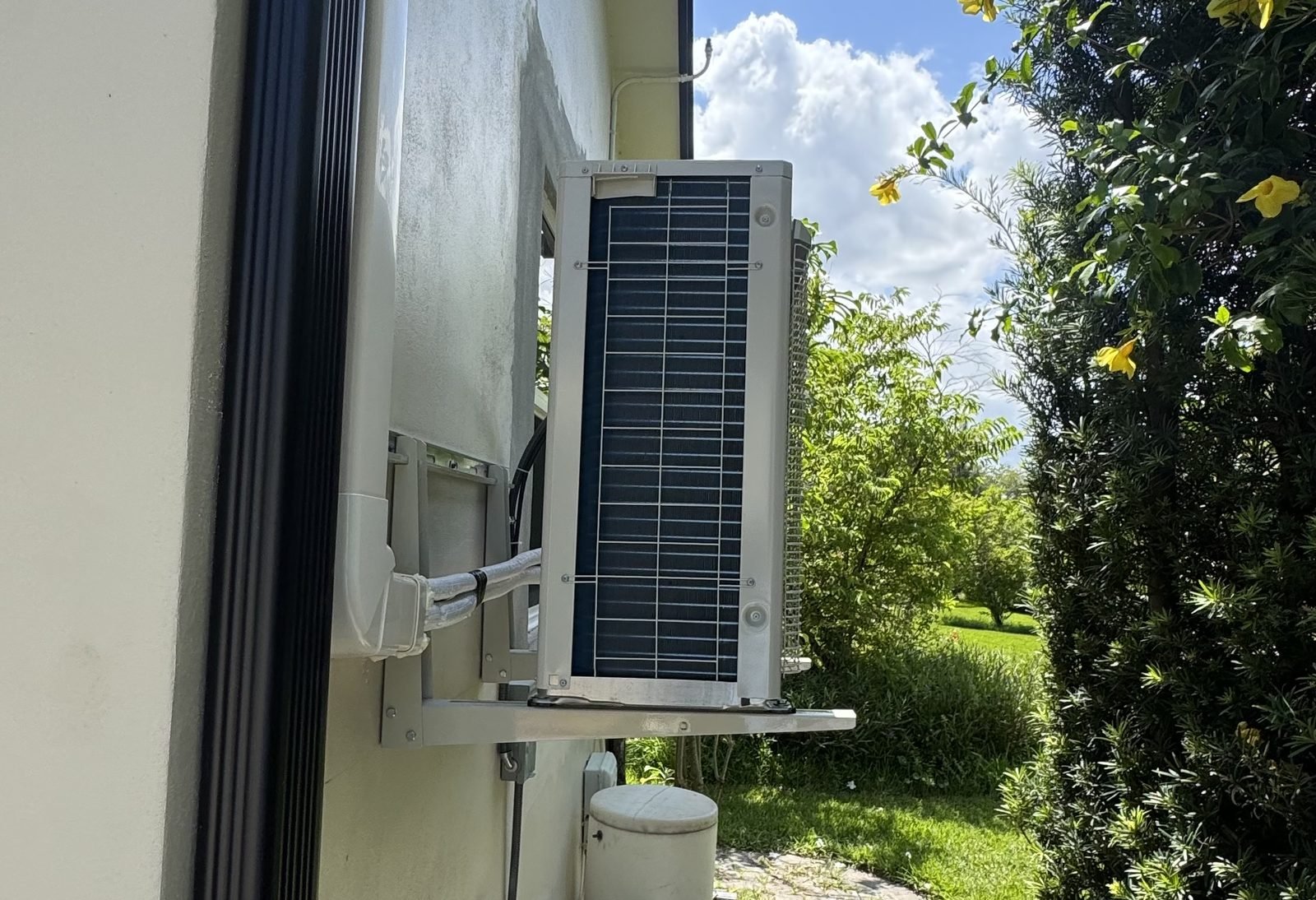
Why converted spaces are harder than they look
A garage or a Florida room was not built to the same standard as the conditioned house. Typically it has:
- Little or no insulation in walls and ceiling.
- An uninsulated slab and often an uninsulated roll-up door opening that was framed in.
- Single-pane or older glass, sometimes a lot of it.
- Air leakage at every original junction.
The result is a room whose cooling load per square foot can be substantially higher than the rest of the house. Feeding it from a duct designed for a bedroom produces a space that never gets comfortable — the classic hot room problem, engineered in from the start.
When extending the central system works
- The addition is small, well insulated, and finished to the same standard as the house.
- A load calculation shows the existing system genuinely has spare capacity — not a guess based on it “seeming to keep up.”
- The trunk duct can be tapped near the new space without long, restrictive runs.
- There is a workable return path, not just a supply.
- You are replacing the system anyway, which is the ideal moment to re-engineer duct sizing for the larger house.
When a mini-split is the better answer
- Converted garages. Almost always. High load, no existing duct, and often no practical route for one.
- Enclosed patios and Florida rooms. Big glass, big load, and frequently used differently from the rest of the house.
- Detached structures — a casita, an office, a workshop. Running duct outside the thermal envelope is a poor idea in this climate.
- Rooms used on a different schedule. A home office cooled during the day, a guest suite used twice a year, a bedroom someone likes at 70 while the house sits at 76. Independent control is the entire point.
- When the existing system has no spare capacity. Extending duct off a system that is already at its limit makes every room worse.
- When the existing system is fine and you do not want to touch it. A separate ductless system does not put the working part of your house at risk.
The honest downsides of ductless
- The wall head is visible. Some people mind a great deal. Ceiling-cassette and low-wall options exist and cost more.
- A separate system to maintain. Mini-split filters and blower wheels need routine cleaning, and neglected heads develop exactly the musty smell that neglected coils do — more noticeably, because the head is in the room with you.
- Condensate has to go somewhere. Gravity drain where possible, a small pump where not.
- Cost per ton is higher than adding duct, when adding duct is genuinely viable.
- Oversizing is easy and harmful. An oversized mini-split short cycles and leaves a humid room, which in this climate is the failure mode that matters.
A third option people forget
If your central system is near the end of its life and you are planning an addition, do both at once. Replacing with correctly sized equipment for the new house, and correcting duct sizing at the same time, is far cheaper than doing the two jobs separately. The duct modifications that are expensive as a standalone project are modest as part of a planned changeout.
Timing that decision is what the repair-vs-replace calculator is for.
What we would ask before recommending either
- How is the space built — insulation, glass area, orientation, ceiling type?
- How and when will it be used?
- What is the existing system’s capacity, age and current performance?
- Where can duct physically run, and is there a return path?
- Is there electrical capacity at the panel for a separate system?
- Any HOA or condo restrictions on exterior equipment? In many buildings this decides it — see condo and HOA rules.
Both routes are legitimate. What is not legitimate is deciding without a load calculation, because the most common outcome of that is a new room that is never quite comfortable and an old system that now struggles too. More on ductless options is on our mini-split page.
Frequently Asked Questions
Can I just add a vent to cool my converted garage?
Rarely with good results. A converted garage usually has far less insulation and a much higher cooling load per square foot than the rest of the house, so a duct branch sized like a bedroom run leaves it uncomfortable and can rob air from existing rooms.
Is a mini-split cheaper than extending central air?
Not always per ton, but often cheaper overall for a converted or detached space, because extending duct into an area that has no practical route is expensive and frequently underperforms. Where a short tap off an existing trunk is genuinely viable, extending can cost less.
Do mini-splits work well in Florida humidity?
Yes, when correctly sized. A properly sized inverter mini-split runs long and slow, which dehumidifies well. An oversized one short cycles and leaves the room cool but damp, so sizing matters more here than the brand does.
Do mini-splits need maintenance?
They do. Filters need regular cleaning and the blower wheel and coil in the indoor head need periodic attention, or the head develops a musty smell that is very noticeable because it is in the room with you.
Should I replace my central system and add the room at the same time?
If the existing system is near the end of its life, yes. Sizing new equipment for the enlarged house and correcting duct work during a planned changeout costs far less than doing the addition now and the replacement separately a year later.
Cooling a New Space?
We will tell you honestly whether your existing system can take it, or whether ductless is the better answer. Free written quote.
- ✔ Free, No-Obligation Estimate
- ✔ Upfront Written Pricing — No Surprises
- ✔ 10-Yr Parts / 1-Yr Labor Warranty
- ✔ Serving Miami-Dade, Broward & Palm Beach
Prefer to talk? Call (305) 846-0155.
