

One Room Always Hotter Than the Rest?
It is almost never that the air conditioner is too small. It is that the air is not getting to that room, or the room is gaining heat faster than the air can remove it.
By Roman Shatokhin · Airo Service · September 2026
The frustrating truth first
Most homeowners with one hot room have already tried the two obvious things: closing vents elsewhere, and turning the thermostat down. Neither works, and the first actively makes things worse. Understanding why points straight at the real fix.
Why closing other vents backfires
Duct systems are designed for a specific total airflow. Closing supply vents does not redirect that air — it raises static pressure, makes the blower work harder, reduces total airflow, and in a sealed-off room it can cause pressure imbalances that pull hot attic air into the house through ceiling penetrations. In the worst cases it contributes to a frozen coil.
Close a couple of vents partially in a large open area and you may nudge things. Close half the house and you have created a new problem.
The five real causes
- The supply run is too long, too small, or crushed. Flex duct is easy to install badly — kinked around a truss, compressed under stored boxes in an attic, or run twenty feet further than the design assumed. A crushed flex run can lose most of its airflow while looking fine from the room.
- There is no return in that room. This is the big one, and it is invisible to most homeowners. Air has to leave a room as fast as it enters. A bedroom with a supply vent, no return, and a door that gets closed at night pressurises, the supply air stalls, and the room warms up. Sleeping with the door open and finding the room comfortable is the diagnostic.
- The room gains more heat than the others. West-facing glass in South Florida is brutal from 3pm onward. Add a room over a garage, under an uninsulated section of attic, or with two exterior walls, and the load in that room is genuinely higher — the duct was sized as though it were not.
- Duct leakage. A disconnected or leaking run in a 130-degree attic delivers a fraction of its air, and some of what it does deliver has been warmed on the way. This is common and measurable.
- Damper position. Some homes have manual balancing dampers in the trunk lines that nobody has touched since installation.
Diagnose it yourself in fifteen minutes
- Hold a hand at the vent. Strong cold air means the duct is fine and the room is losing to heat gain. Weak air means a duct or airflow problem. That single test splits the diagnosis in half.
- Try the door test. Leave the door wide open for a few hours and compare. If the room behaves with the door open, you have a return-air problem, not a capacity problem.
- Check the attic run if you can do so safely — look for a duct that is kinked, crushed, disconnected at the boot, or buried under storage.
- Measure temperatures with a cheap thermometer at the same height in two rooms, at the same time of day. It turns an argument into data.
- Note the time of day. A room that is fine at 9am and unbearable at 5pm is a solar-gain problem.
The fixes, cheapest first
- Open every vent and register fully. Free, and it undoes the damage from earlier attempts.
- Undercut the door or add a transfer grille. Modest cost, and it is the correct answer for the closed-bedroom case — the room needs a path for air to get back to the return.
- Repair or replace the duct run. Straightening a kinked flex, reconnecting a dropped boot, or replacing an undersized run often produces a dramatic change for a moderate cost.
- Seal the duct system. Worth doing for efficiency regardless — duct sealing addresses leakage you cannot reach by hand.
- Add a return. The proper structural fix where a bedroom wing has none.
- Balance the system. Adjusting dampers, and where fitted, tuning airflow at the air handler.
- Attack the heat gain. Solar film or better window coverings on west glass, and attic insulation — blown-in insulation is one of the highest-value comfort upgrades in this climate.
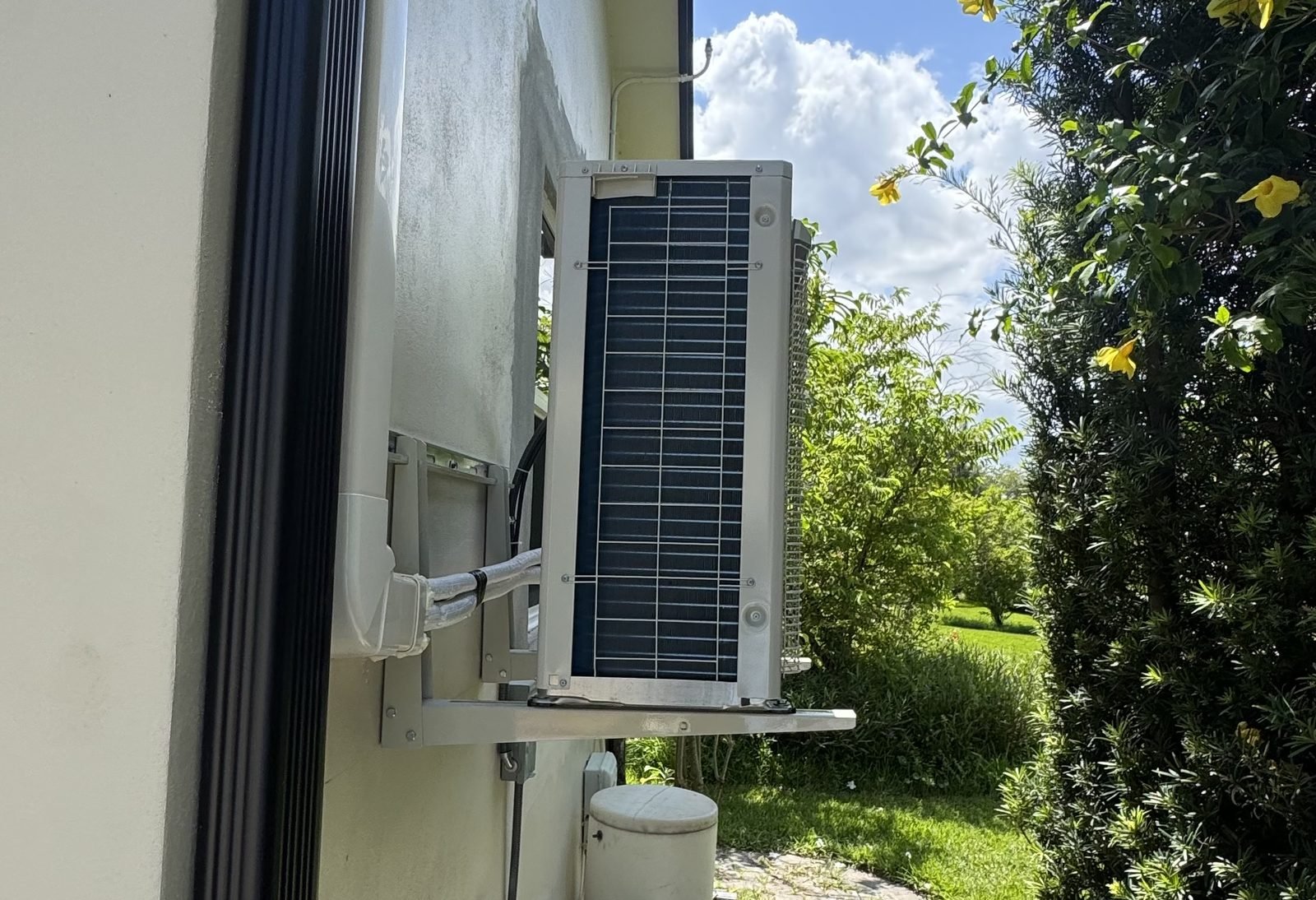
- Add a ductless mini-split. The right answer for a converted garage, an addition, a Florida room or an office over a garage — anywhere the duct system was never designed to serve. See mini-split vs central AC for an addition.
What we would not recommend
Replacing a whole system because one room is hot. If the rest of the house is comfortable, the system has the capacity — the distribution has the problem. A larger unit moves the same air through the same undersized duct into the same room and gives you short cycling and humidity into the bargain.
The one exception is when a system is genuinely at the end of its life anyway, in which case the replacement is a good moment to correct duct sizing, add a return, and consider zoning — the things that are expensive as standalone jobs and reasonable as part of a planned changeout.
Frequently Asked Questions
Why is one room in my house always hotter?
Usually the room is not getting enough airflow — a crushed or undersized duct run, a leaking duct in the attic, or no return path when the door is closed — or it simply gains more heat than the others from west-facing glass or an uninsulated attic above it.
Does closing vents in other rooms help cool a hot room?
No, and it usually makes things worse. Closing vents raises static pressure, reduces total airflow, strains the blower, and can create pressure imbalances that pull hot attic air into the house. Every vent should be fully open.
Why does my bedroom get hot when I close the door?
Because air has no way back to the return. The supply keeps pushing air in, the room pressurises, incoming airflow stalls, and the temperature climbs. Undercutting the door or adding a transfer grille or a dedicated return solves it.
Will a bigger air conditioner fix uneven cooling?
Almost never. If the rest of the house is comfortable, capacity is not the issue — distribution is. A larger unit pushes the same air through the same restricted duct and adds short cycling and humidity problems on top.
Is a mini-split a good solution for one hot room?
It is often the best solution where the duct system was never designed to serve that space — a converted garage, an addition, an enclosed patio or a bonus room. It adds capacity exactly where it is needed without re-engineering the whole duct system.
Fix the Hot Room Properly
We diagnose airflow before we sell equipment. Ductwork, returns, dampers or a ductless unit — whichever the house actually needs.
- ✔ Free, No-Obligation Estimate
- ✔ Upfront Written Pricing — No Surprises
- ✔ 10-Yr Parts / 1-Yr Labor Warranty
- ✔ Serving Miami-Dade, Broward & Palm Beach
Prefer to talk? Call (305) 846-0155.
