

Outdoor Unit Vibrating or Rattling? Causes, Fixes and When to Worry
Some of this is a loose screw and ten minutes. Some of it is a compressor telling you something. The difference is easy to hear once you know what to listen for.
By Roman Shatokhin · Airo Service · August 2026
Start by placing the noise
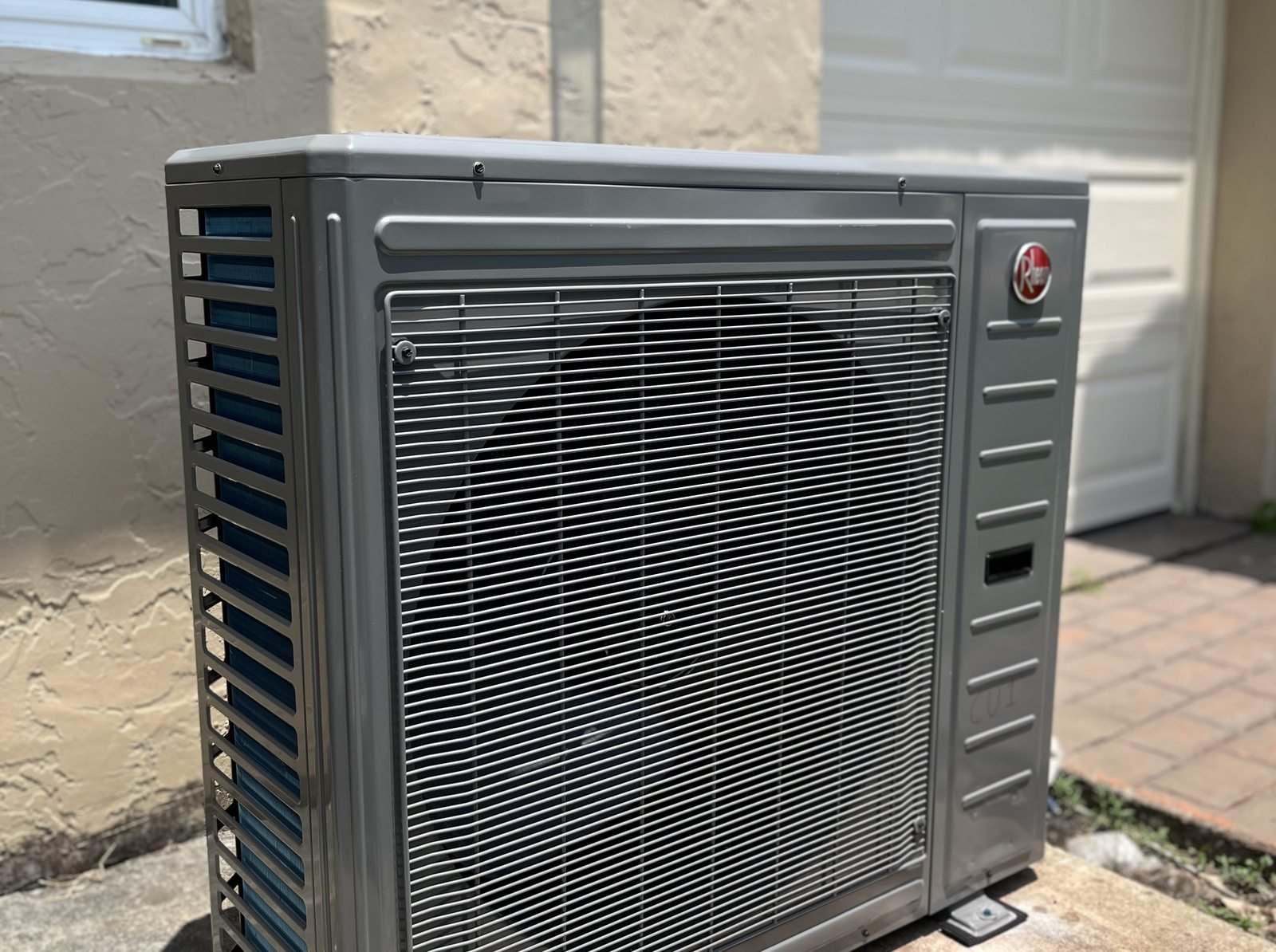
Stand next to the unit while it runs and work out which of three things is making the sound: the cabinet and panels, the fan at the top, or the compressor low down inside. Almost every diagnosis follows from that.
A quick and surprisingly reliable test: press a flat hand firmly on the cabinet side. If the rattle stops or changes noticeably, you are dealing with panel vibration rather than an internal mechanical fault.
The trivial causes — genuinely common
- Loose panel screws. Years of vibration back them out. Tightening them is often the whole repair.
- Debris in the cabinet. Palm fronds, leaves, a stray twig against the fan grille, and in this part of the world the occasional lizard or frog. Power off at the disconnect before anyone reaches in.
- The grille or top guard. Bent slightly by a lawnmower, a hurricane shutter, or a pressure washer, and now contacting the fan blade intermittently.
- Line set contact. The copper touching the cabinet or the wall transmits vibration straight into the structure — this is the one people hear inside the house rather than outside.
The mechanical causes
- Unbalanced fan blade. A blade that has been bent or has lost a balance weight wobbles, and the wobble worsens the motor bearings over time. It sounds like a rhythmic rattle that rises and falls with fan speed.
- Worn fan motor bearings. Growl or grind rather than rattle, and it gets louder as the unit warms up.
- Failed compressor isolation mounts. The rubber grommets under the compressor perish, and the whole cabinet then shakes hard on start-up. Common on units past about ten years here.
- Internal compressor noise. A heavy knocking or clattering from low in the cabinet that does not respond to anything external. This is the serious one.
What South Florida adds
Two local factors show up constantly on these calls. The first is the pad. Ground here shifts, and a condenser pad that has settled unevenly puts the cabinet slightly out of level, which makes every vibration worse and stresses the line set where it enters the wall. Re-levelling a pad is unglamorous and fixes a lot of noise.
The second is corrosion. Salt air eats fasteners, brackets and mounting hardware faster than most homeowners expect, so a unit near the coast can develop rattles simply because the hardware holding it together has thinned. Hurricane tie-down straps and brackets are worth inspecting for the same reason — they are structural, not decorative, and in the High Velocity Hurricane Zone they are code.
What you can safely do yourself
- Kill power at the outdoor disconnect first. Not just the thermostat. Every time.
- Clear leaves, grass clippings and debris from around and inside the base of the cabinet.
- Snug up visibly loose panel screws.
- Check that nothing is leaning against the unit — a bin, a hose reel, a hurricane panel stored down the side.
- Keep two feet of clear space around the cabinet. Airflow restriction is a separate and expensive problem.
What to leave alone: anything requiring a panel to come off, anything touching the fan motor or capacitor — capacitors hold a charge after power is removed — and anything involving the refrigerant lines.
When to stop running it
Shut the system down and call if you hear a hard metallic banging or grinding that is continuous, if the whole cabinet is shaking violently rather than humming, or if the vibration arrived suddenly along with weaker cooling. Continuous internal noise from the compressor is the point at which running it longer stops saving money.
If the noise is a hum with no fan movement, that is a capacitor rather than a vibration issue — see the sound-by-sound decoder.
Why it is worth fixing early
Vibration is not just noise; it is mechanical work being done on your equipment continuously. It backs out fasteners, wears line-set insulation, fatigues brazed joints, and is a genuine contributor to refrigerant leaks at connection points. A rattle that costs very little to fix in March costs considerably more once it has shaken a joint loose in August.
Most of it gets caught at a routine tune-up, which is the boring answer, but it is the true one.
Frequently Asked Questions
Why is my outdoor AC unit shaking so much?
Most often loose panels or hardware, an unbalanced fan blade, or perished compressor isolation mounts that no longer damp the start-up shock. An uneven or settled mounting pad amplifies all of them, which is common in South Florida where ground shifts.
Is it safe to run my AC if the outdoor unit is rattling?
Usually yes for a short period if the noise is a light rattle from panels or debris. Stop running it if you hear continuous metallic grinding or heavy knocking from low in the cabinet, or if the whole unit shakes violently, because that points to the compressor.
Can I fix a rattling AC unit myself?
You can safely clear debris, tighten obviously loose panel screws and make sure nothing is leaning against the cabinet — always after cutting power at the outdoor disconnect. Leave anything behind a panel alone, particularly the capacitor, which holds a charge after power is off.
Does an uneven pad really matter?
Yes. A condenser sitting out of level vibrates more, wears its mounts faster, and puts continuous stress on the refrigerant line set where it enters the wall. Re-levelling the pad is a modest job that quietens a surprising number of units.
Will vibration damage my air conditioner over time?
It will. Continuous vibration backs out fasteners, wears line-set insulation and fatigues brazed joints, and connection-point refrigerant leaks are one of the eventual results. Fixing a rattle early is genuinely cheaper than dealing with what it causes.
Get the Rattle Diagnosed Before It Costs More
Vibration loosens fittings and wears line sets. We find the source and fix it properly. Same-day appointments available.
- ✔ Free, No-Obligation Estimate
- ✔ Upfront Written Pricing — No Surprises
- ✔ 10-Yr Parts / 1-Yr Labor Warranty
- ✔ Serving Miami-Dade, Broward & Palm Beach
Prefer to talk? Call (305) 846-0155.