

AC Making a Loud Noise? A Sound-by-Sound Decoder
Banging, squealing, clicking, buzzing, hissing, gurgling. Each one points somewhere specific — and two of them mean shut it off now.
By Roman Shatokhin · Airo Service · August 2026
First: the two sounds that mean stop
Most air conditioner noises are annoying rather than dangerous. Two are not.
- A loud electrical buzz or hum accompanied by a burning smell. Shut the system off at the breaker and call. Do not keep cycling it to see if it clears. See what to do about a burning smell.
- A hard metallic banging or grinding from the outdoor unit that is continuous rather than occasional. That is usually something loose inside the compressor or a fan striking the shroud. Running it longer converts a repair into a replacement.
Everything below can generally wait until a technician can get to you, though not indefinitely.
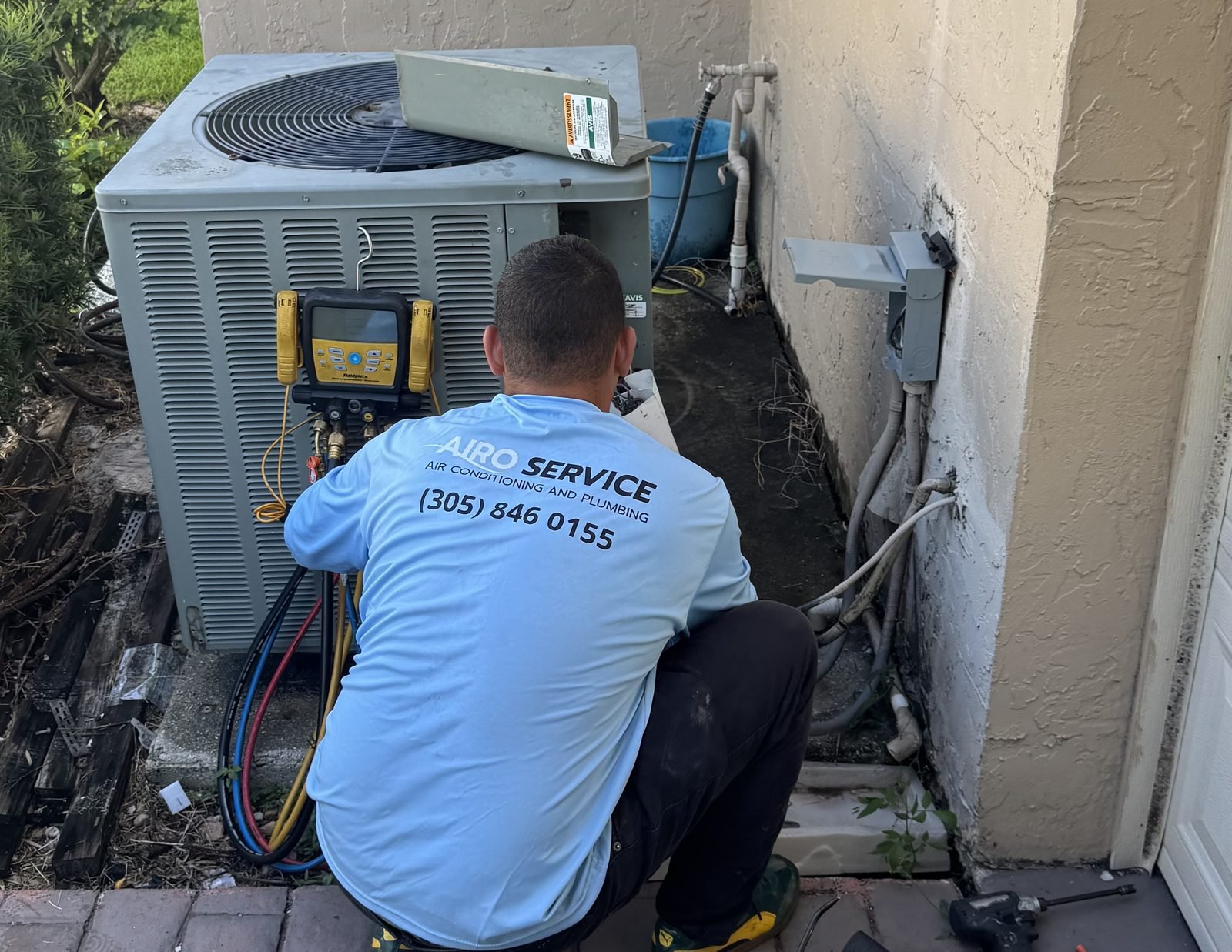
Banging or clanking — outdoor unit
A single loud bang at start-up is often the compressor mounts or a hard-start condition. Repeated clanking while running usually means a loose or unbalanced fan blade, a fan blade contacting the grille, or debris that has found its way into the cabinet — palm fronds and lizard-sized surprises are a genuine South Florida category.
The one that costs money is internal compressor knock, which sounds like something loose rattling inside a sealed drum and does not stop. That noise is the compressor telling you it is near the end.
Squealing or screeching
- High-pitched squeal at start-up that fades — commonly a worn blower or fan motor bearing, or a belt on older equipment. Not urgent, but it does not heal.
- Continuous screech from the outdoor unit — can indicate high internal pressure, which is a genuine reason to shut it down and call rather than wait a week.
- Squeal from the air handler that changes with fan speed — blower wheel or motor bearings, and often accompanied by weaker airflow at the vents.
Clicking
Clicking once at the start and once at the end of a cycle is completely normal — that is the contactor and relays doing their job. What is not normal is repeated rapid clicking with no start, which usually points to a failed capacitor, a contactor that is pitted, or a compressor trying and failing to start. It is one of the most common calls we run, and it is an inexpensive repair when caught early.
Clicking from the thermostat with nothing happening downstream is a different problem — see what to check when the system is dead.
Buzzing or humming
Electrical buzz from the disconnect box or the contactor is the classic failing-capacitor sound. The fan may sit still while the unit hums. In Florida heat, capacitors are one of the most frequently replaced components on the machine, and a failing one puts real strain on the compressor before it dies outright.
A loud vibrating hum that seems to come from the whole cabinet is usually mechanical rather than electrical — see a vibrating outdoor unit.
Hissing or bubbling
Hissing typically means refrigerant escaping under pressure, and bubbling or gurgling can indicate refrigerant flashing in the line or, more benignly, condensate moving through a trap. Because a refrigerant leak now carries a serious materials cost, this one is worth investigating quickly rather than living with. Full detail in hissing and bubbling sounds.
Rattling, whistling and the ones people ignore
- Rattling panel — genuinely just a loose screw about half the time. Worth tightening because vibration multiplies.
- Whistling at the vents or a whooshing return — almost always airflow restriction. A clogged filter, closed dampers, or too few returns for the system. It is also a quiet efficiency loss, so it is not merely cosmetic.
- Sucking or fluttering sound at the return grille — the filter is too restrictive or overdue. See choosing the right filter MERV rating.
- Water dripping or trickling inside — that is a drain problem, not a noise problem, and it will become a ceiling problem. See AC leaking water inside the house.
What to do before you call
Two minutes of observation makes the diagnosis faster and the repair cheaper:
- Where is it coming from — the outdoor unit, the air handler, or the vents?
- When does it happen — only at start-up, only at shut-down, or the whole time it runs?
- Has anything else changed — weaker airflow, warmer air, higher bill, a smell?
- Record it on your phone. Honestly one of the most useful things a homeowner can do. Sounds are hard to describe and instantly recognisable when heard.
The noises that come from neglect
A fair share of the calls in this list trace back to the same three things: a filter that went too long, a condenser coil packed with dust and grass, and bearings that were never going to get any attention. None of that is a moral failing — equipment here runs hard and quietly asks for very little. A yearly tune-up catches the squeal before it becomes a motor, and the weak capacitor before it becomes a compressor.
Frequently Asked Questions
Which air conditioner noises are actually dangerous?
Two. An electrical buzz combined with a burning smell means shut the system off at the breaker immediately, and a continuous metallic grinding or banging from the outdoor unit means stop running it before the damage spreads to the compressor. Most other noises can wait for a scheduled visit.
Why does my AC click repeatedly but never start?
That pattern usually points to a failed run capacitor, a pitted contactor, or a compressor that is trying to start and cannot. It is one of the most common service calls in South Florida and, caught early, one of the least expensive repairs on the system.
Is a squealing noise from my air handler serious?
It is rarely an emergency but it never improves on its own. A squeal that appears at start-up or changes with fan speed usually means worn blower motor bearings, and it often shows up alongside weaker airflow at the vents. Replacing a motor is cheaper than replacing a motor plus the coil it iced over.
Is it normal for my AC to click at the start and end of every cycle?
Yes. A single click as the system starts and another as it stops is the contactor and relays doing their job, and it is completely normal. What is not normal is rapid repeated clicking with no start, or clicking that has become noticeably louder than it used to be.
Can a noisy air conditioner just be old?
Equipment does get louder as bearings wear and mounts age, but a specific new noise is information rather than character. The useful test is whether it appeared suddenly or crept in over years — sudden means something changed, and something that changed can usually still be fixed cheaply.
Something Does Not Sound Right?
We diagnose the noise properly instead of guessing at parts. Same-day appointments across Miami-Dade, Broward and Palm Beach.
- ✔ Free, No-Obligation Estimate
- ✔ Upfront Written Pricing — No Surprises
- ✔ 10-Yr Parts / 1-Yr Labor Warranty
- ✔ Serving Miami-Dade, Broward & Palm Beach
Prefer to talk? Call (305) 846-0155.