

AC Runs Constantly and Never Shuts Off
On a 94-degree August afternoon in Miami, a system that runs continuously may be doing exactly what it should. Here is how to tell that apart from a fault.
By Roman Shatokhin · Airo Service · September 2026
First, the question that settles it
Is the house reaching the setpoint?
If your system runs continuously and the house sits at the temperature you asked for, it is working — hard, but correctly. If it runs continuously and the temperature keeps drifting up, something is wrong. Those are two completely different articles and people constantly confuse them.
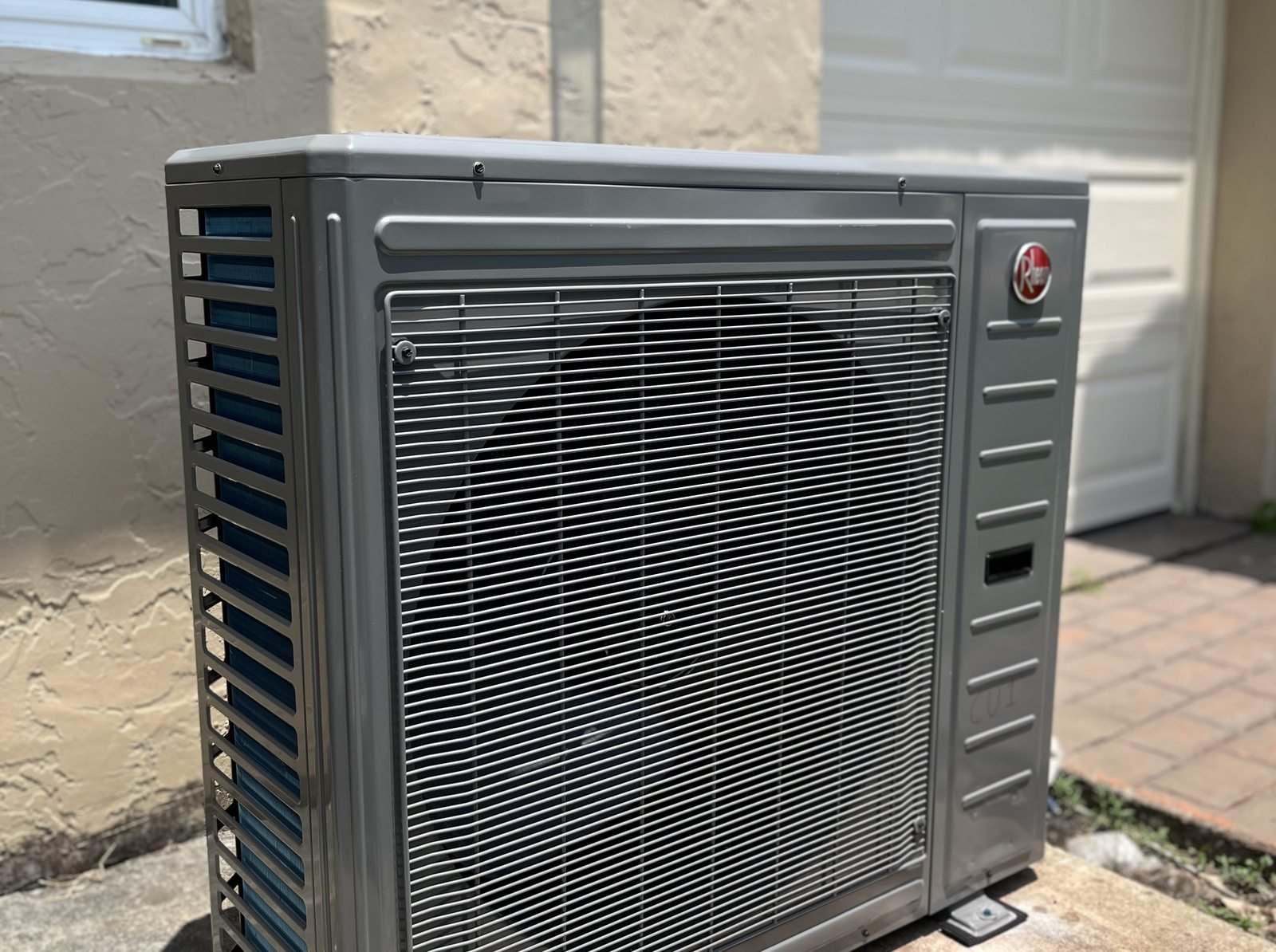
When continuous running is normal
South Florida in July and August is the design edge case for residential equipment. Systems are sized for a target outdoor temperature, and when the actual day exceeds it — especially with humidity to remove on top — a correctly sized unit will simply run.
Add any of these and it is more normal still:
- Late afternoon, when the house has absorbed heat all day and west-facing glass is loaded.
- A low setpoint. Asking for 70 when it is 94 outside is asking for a run time you will not like.
- A variable-speed system. These are designed to run almost continuously at low capacity — that is the whole point, and it produces better humidity control and lower bills than starting and stopping. See what a variable-speed AC is.
- A full house, a party, cooking, or a door that has been open.
Long steady cycles are genuinely healthier for the equipment than short ones — the opposite problem is covered in short cycling.
When it is a fault
The warning signs are the ones that come with the continuous running:
- The house never reaches setpoint, or falls further behind through the afternoon.
- Air from the vents is cool rather than cold — a rough rule is that supply air should be around fifteen to twenty degrees cooler than the air going into the return.
- Humidity is high even though the temperature is acceptable.
- The bill jumped without a change in weather or habits — see why your bill spikes in August.
- It used to cycle normally last summer and does not now. Change over time is the strongest signal on this list.
The usual causes, in rough order
- Low refrigerant. Reduced capacity means the system can never catch up. Comes with weak cooling and sometimes ice on the line: leak signs.
- A dirty condenser coil. The outdoor coil cannot reject heat, capacity collapses, and the system runs endlessly trying. Extremely common here, and largely preventable.
- Restricted airflow indoors. Filter, blower wheel, or a coil that has never been cleaned.
- Duct leakage in the attic. A system delivering a meaningful share of its cold air into a 130-degree attic can run all day without winning. This one is invisible from inside the house.
- An undersized system, or a house that changed. An enclosed patio, a converted garage, or new glass changes the load the system was sized for.
- A stuck contactor or a miswired thermostat. The specific case where the system genuinely never stops — it keeps running even after the setpoint is reached, sometimes freezing the house and then the coil. This is a real fault and needs attention.
- Failing compressor. A compressor losing capacity still runs, still draws current, and no longer cools well.
The one dangerous version
If the system runs and runs, the house gets very cold, and it still does not shut off, suspect a welded contactor or a control fault. Left alone, that ices the evaporator coil, and a coil packed in ice can send liquid refrigerant back to the compressor. Shut the system off at the breaker and call rather than letting it run overnight.
What to check before calling
- Measure the split. A thermometer at a supply vent and one at the return grille. Under about fifteen degrees of difference on a hot day suggests a capacity problem.
- Change the filter and check every vent is open.
- Look at the outdoor coil — hose it gently with the power off if it is packed.
- Check the thermostat is not set to fan ON, which makes the system appear to run constantly when only the blower is going.
- Compare with last year. Your utility usage history is free and more accurate than memory.
The honest bottom line
In this climate, an air conditioner that runs a great deal in August is not a defect. What we look for is the combination — long run times plus a weak temperature split, plus high humidity, plus a bill that moved. That combination is a system losing capacity, and it is worth finding out why before the compressor makes the decision for you.
Frequently Asked Questions
Is it bad if my AC runs constantly in Florida summer?
Not necessarily. On a very hot, humid afternoon a correctly sized system may run continuously and that is normal, particularly for variable-speed equipment which is designed to do exactly that. The problem is only when it runs constantly and still cannot reach the setpoint.
How cold should the air from my vents be?
As a rough guide, supply air should be about fifteen to twenty degrees cooler than the air entering the return. Less than that on a hot day suggests reduced capacity from low refrigerant, a dirty condenser coil, or restricted airflow.
Why does my AC run all day but the house stays warm?
Common causes are low refrigerant from a leak, a condenser coil packed with debris, restricted indoor airflow, or duct leakage dumping cold air into the attic. A system that changed behaviour compared with last summer has lost capacity somewhere.
My AC will not shut off even when the house is cold. What is that?
That points to a stuck or welded contactor or a control or thermostat fault. It is worth acting on quickly, because continuous running past setpoint can freeze the evaporator coil and send liquid refrigerant back to the compressor. Shut it off at the breaker and call.
Does running the AC constantly cost more than cycling it?
Not always. Long steady cycles at lower capacity are more efficient and far better for humidity control than frequent starts, which is why variable-speed systems run almost continuously by design. Constant running only signals waste when the system is failing to keep up.
Running Non-Stop and Not Keeping Up?
We measure what the system is actually delivering rather than guessing. Same-day appointments across South Florida.
- ✔ Free, No-Obligation Estimate
- ✔ Upfront Written Pricing — No Surprises
- ✔ 10-Yr Parts / 1-Yr Labor Warranty
- ✔ Serving Miami-Dade, Broward & Palm Beach
Prefer to talk? Call (305) 846-0155.
