

Why an R-410A Recharge Costs So Much Now (And What We Do Instead)
The same pound of refrigerant went from about $8 wholesale to as much as $45. Here is what that does to a Florida repair bill, and why topping up every spring stopped being a plan.
By Roman Shatokhin · Airo Service · August 2026
The number behind the sticker shock
For most of the last decade, R-410A traded at roughly $8 to $12 per pound wholesale. In 2026 the same refrigerant sits somewhere around $25 to $45 per pound, and it has been volatile enough that two quotes a month apart can genuinely differ.
Nothing about the chemical changed. What changed is supply: federal phase-down rules cut how much new high-GWP refrigerant may be produced each year, while a very large installed base of R-410A systems — including most air conditioners in South Florida — still needs servicing. Demand stayed, production shrank, price moved.
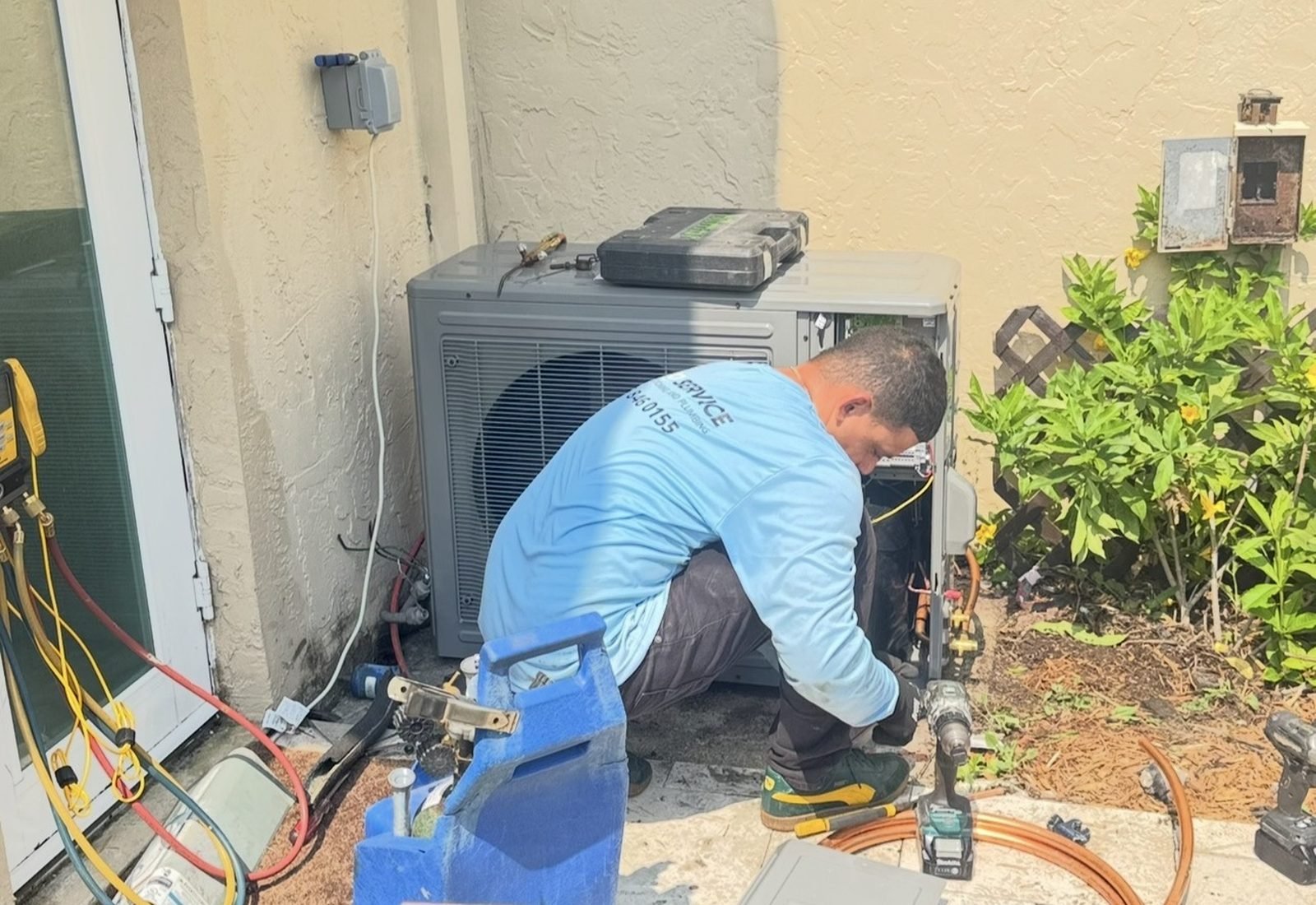
What that means on an actual invoice
A typical three-ton residential system in this market holds somewhere in the region of eight to twelve pounds of refrigerant. Do the arithmetic on a system that has lost a third of its charge and the refrigerant alone is no longer a rounding error — before any labour, leak search, nitrogen, evacuation or recovery.
This is why homeowners who remember a $150 “top-off” from 2018 are getting quotes several times that and assuming somebody is taking advantage of them. In most cases nobody is. The line item genuinely moved.
The thing most people have never been told
Refrigerant is not fuel. It is not consumed, it does not wear out, and a sealed system should never need more of it. If your system is low, it leaked. There is no other explanation. The sounds and symptoms that give a leak away are in AC hissing or bubbling.
So a “recharge” is not a repair. It is a refill of a container with a hole in it. At $8 a pound, the industry got away with treating that as an acceptable annual ritual. At $45 a pound, the ritual costs more than fixing the actual problem — which is roughly the point at which the honest approach and the cheap approach finally agree with each other.
What a proper visit looks like
- Measure before touching anything. Pressures, temperatures, superheat and subcooling. Plenty of “low on refrigerant” calls turn out to be a filthy filter, a blocked condenser coil, or a failing blower — all of which mimic low charge.
- Find the leak, not just the symptom. Electronic detection, bubble solution, or nitrogen pressure testing depending on where the loss is. Common culprits here: evaporator coil pinholes from formicary corrosion, Schrader valve cores, service-valve caps, and line-set rub-throughs in an attic.
- Price the repair honestly. A valve core is minor. A brazed line-set repair is moderate. A leaking evaporator coil on a twelve-year-old system is a replacement conversation, and we will say so.
- Recover, repair, evacuate, weigh in. Charge measured by weight to the manufacturer specification, not guessed by gauge pressure on a 95-degree afternoon.
When adding refrigerant is still the right call
It is not always wrong. Reasonable cases:
- A small, identified, slow leak on a system you are keeping short-term — you have already decided to replace in the autumn, and you need to get through August. Fair enough, as long as everyone is honest about what is being bought.
- After a genuine repair — the leak is fixed and the system needs its charge restored. That is not a top-up, that is finishing the job.
- A system that is genuinely undercharged from a bad install — it happens, and it is worth correcting properly.
What is not reasonable is being sold the same three pounds every May for four years without anyone ever putting a leak detector on the coil.
Red flags when someone quotes you a recharge
- No leak search offered, and no explanation of where the refrigerant went.
- A per-pound price quoted without saying how many pounds are going in.
- “It just needs a little Freon” on a system that had the same visit last year.
- A flat “recharge special” advertised at a suspiciously low price — the maths does not work at current wholesale, so the money is coming from somewhere else in the ticket.
If you are trying to judge whether a contractor is being straight with you, the broader checklist is in how to choose an HVAC contractor in South Florida.
The bigger decision hiding underneath
Very often the refrigerant price is not really the question. The question is whether a system that is now leaking has enough life left to justify the repair at all. That calculation genuinely changed in 2025, and we worked it through with numbers in repair or replace an R-410A system in 2026 and in the repair-vs-replace calculator.
And for the background on why the supply tightened in the first place, see the R-410A phase-out explained.
Frequently Asked Questions
How much does it cost to recharge an R-410A air conditioner in 2026?
It depends on how many pounds the system lost, and any honest quote will say so. With wholesale sitting around $25-45 per pound and a typical three-ton system holding eight to twelve pounds, the refrigerant alone is now a significant part of the bill, before leak search, recovery, evacuation and labour.
Why does my AC need refrigerant every year?
Because it has a leak. Refrigerant is not consumed in normal operation, so a system that needs topping up annually is losing it somewhere — commonly a corroded evaporator coil, a leaking valve core, or a rubbed line set. At current prices, finding that leak is cheaper than refilling it each spring.
Is there a cheaper substitute refrigerant I can use instead?
Not safely or legally in a system designed for R-410A. So-called drop-in replacements sold online can change system pressures, damage the compressor, void the equipment listing and warranty, and create a genuine hazard. There is no approved alternative charge for R-410A equipment.
Will R-410A run out?
It is not being banned for servicing existing systems, and reclaimed refrigerant will keep the installed base running for years. What is happening is a steady production phase-down, so expect availability to stay adequate and pricing to stay high and unpredictable.
Should I just replace the system instead of paying for refrigerant?
If the system is over about twelve years old, or the leak is in the evaporator or condenser coil, replacement is usually the better economics — especially in South Florida where equipment runs close to year-round. For a newer system with a repairable leak, fixing it is still clearly the right answer.
Low on Refrigerant? Find the Leak First
We locate the leak, price the actual repair, and show you the numbers before adding a pound of anything. Same-day appointments available.
- ✔ Free, No-Obligation Estimate
- ✔ Upfront Written Pricing — No Surprises
- ✔ 10-Yr Parts / 1-Yr Labor Warranty
- ✔ Serving Miami-Dade, Broward & Palm Beach
Prefer to talk? Call (305) 846-0155.
