

AC Permits and Inspections in Florida: What Actually Happens
Yes, replacing an air conditioner needs a permit. Skipping it saves a few hundred dollars now and costs considerably more at closing.
By Roman Shatokhin · Airo Service · September 2026
Yes, it needs a permit
Replacing a residential air conditioning system is permitted work throughout South Florida. Miami-Dade, Broward and Palm Beach all require a mechanical permit for a changeout, and the work is inspected afterwards. This applies to a straightforward like-for-like replacement, not just to new construction.
Small repairs generally do not require one — replacing a capacitor or a motor is service work. The line is roughly at replacing equipment or altering the system.
Who pulls it
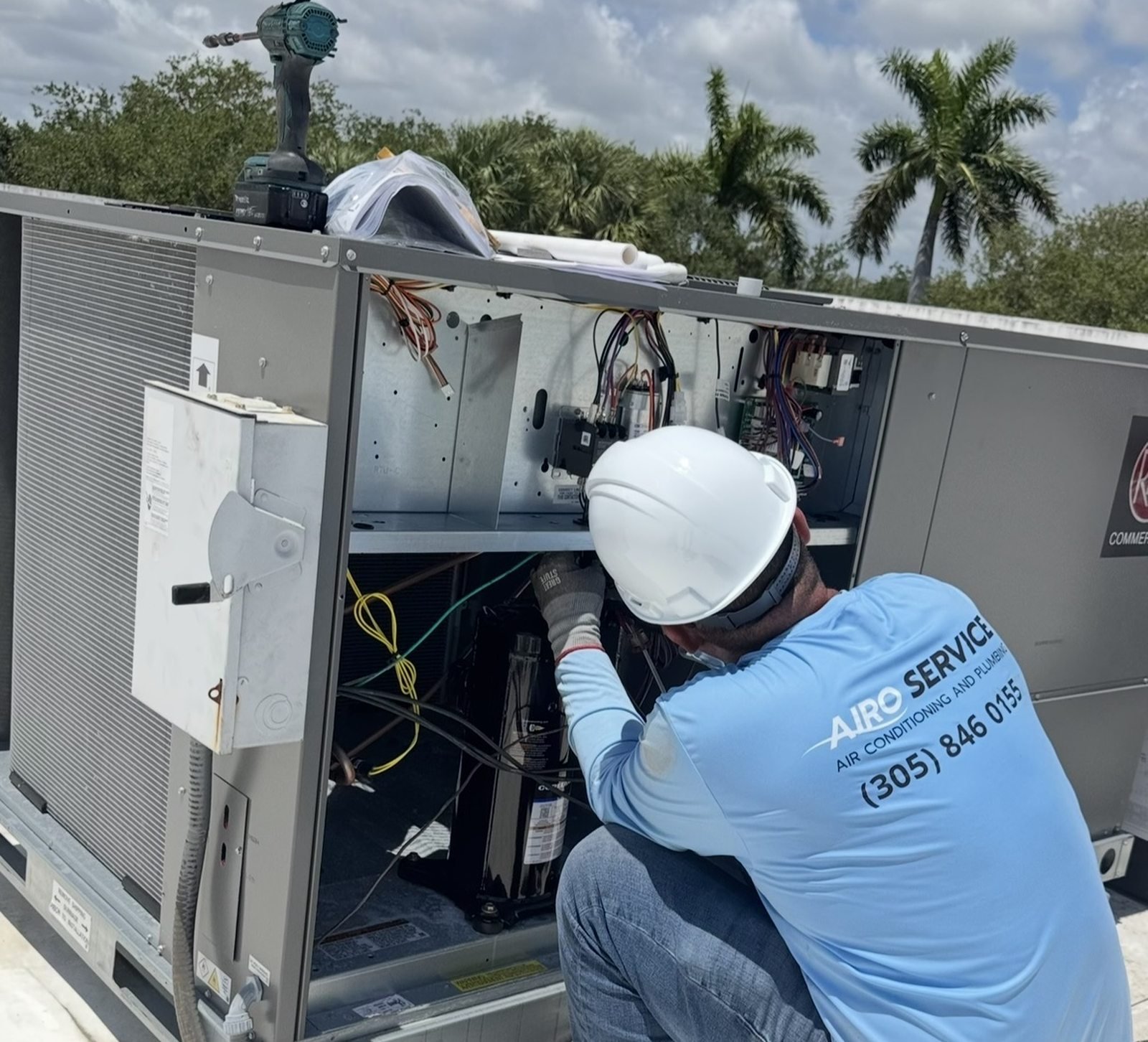
Your licensed contractor should pull the permit under their own licence. If a company asks you to pull it as a homeowner, treat that as a warning. It shifts liability to you, it means the inspector is dealing with you rather than the professional who did the work, and it frequently indicates the contractor cannot pull it themselves.
What the inspector actually checks
It is a shorter, more practical list than most homeowners expect:
- Equipment anchoring. The outdoor unit must be secured against wind loads. In the High Velocity Hurricane Zone — which covers Miami-Dade and Broward — this is a genuine requirement with specific standards, not a formality.
- Product approval. Equipment used in the HVHZ needs appropriate approval documentation. Your contractor handles this, but it is why the cheapest imported unit found online is not necessarily installable here.
- Electrical. Correct breaker size, a proper disconnect within sight of the unit, correct wire size, and a properly made whip.
- Condensate. A drain with proper fall, a trap, a secondary drain or pan where the unit sits above finished space, and a working float switch.
- Clearances. Adequate service access around the equipment.
- Duct connections and insulation where they were altered.
- Line set support and insulation.
Roughly how it goes
- Before the work: the contractor applies for the permit. Depending on the jurisdiction and the workload, this can be same-day online or take a few days.
- The installation proceeds once the permit is issued.
- The inspection is scheduled afterwards, typically within a few days to a couple of weeks. You generally need to provide access, so someone must be home — the inspector needs to see the air handler as well as the outdoor unit.
- Pass: the permit is closed and the record stands with the county or city.
- Fail: the contractor corrects the item and it is re-inspected. This is not a disaster; minor corrections are routine.
The single most common failure mode we see is not a failed inspection — it is a permit that was pulled, passed and never closed out. An open permit sitting on a property record causes exactly the same problems at closing as no permit at all, so ask your contractor to confirm the permit is finalised.
What it costs
Permit fees vary by jurisdiction and are usually a few hundred dollars or less for a residential changeout. In a properly presented quote it appears as a line item — and if a quote does not mention it at all, that is one of the hidden costs worth asking about directly.
What skipping it actually costs
- At sale. Unpermitted work surfaces in title and municipal searches. Buyers and their attorneys ask for it to be resolved, and resolving it after the fact means an after-the-fact permit, possible fees, and sometimes opening up completed work for inspection.
- With insurance. After storm damage, an insurer may ask whether equipment was installed to code and permitted. This is a bad moment to find out that it was not.
- With the manufacturer. Some warranty terms require installation in accordance with local code.
- Safety. The items on the inspection list — anchoring, electrical, condensate protection — are the items that cause damage when they are wrong. In hurricane country, the tie-down requirement is not bureaucratic.
Condos and HOAs add a layer
A permit is between you and the local building department. Your building association is separate and often has its own requirements: approved vendor lists, insurance minimums, elevator scheduling, restrictions on work hours, and rules about where outdoor equipment may sit. Both processes have to be satisfied, and the association’s approval usually needs to come first. See condo AC replacement rules.
What to ask for and keep
- The permit number, and confirmation of which jurisdiction issued it.
- Confirmation that the final inspection passed and the permit is closed.
- The itemised invoice with model and serial numbers.
- Confirmation that the equipment was registered with the manufacturer — see the registration trap.
Four documents in one folder. They are what make the system yours on paper as well as in the side yard.
Frequently Asked Questions
Do I need a permit to replace my air conditioner in Florida?
Yes. A mechanical permit is required for a residential changeout throughout Miami-Dade, Broward and Palm Beach, followed by an inspection. Ordinary repairs such as replacing a capacitor or a motor do not require one.
Who is supposed to pull the AC permit?
Your licensed contractor, under their own licence. If a company asks you to pull it as a homeowner, it shifts liability onto you and often indicates their licensing will not support the work. It is a reason to reconsider the contractor.
What does the AC inspector check?
Equipment anchoring against wind loads, product approval in the High Velocity Hurricane Zone, electrical breaker and disconnect sizing, condensate drain fall, trap, secondary pan and float switch, service clearances, and duct and line-set connections and insulation.
What happens if my AC was installed without a permit?
It typically surfaces during a title or municipal search when you sell, and buyers ask for it to be resolved. Fixing it after the fact means an after-the-fact permit, possible fees, and sometimes opening completed work for inspection. It can also complicate insurance and warranty claims.
How long does the permit and inspection process take?
The permit is often issued within a few days, sometimes same-day online, and the inspection usually follows within a few days to a couple of weeks after installation. The important step people miss is confirming the permit was actually closed out afterwards.
Permit Included, Inspection Handled
We pull the permit under our own licence, schedule the inspection, and close it out — every changeout, every time.
- ✔ Free, No-Obligation Estimate
- ✔ Upfront Written Pricing — No Surprises
- ✔ 10-Yr Parts / 1-Yr Labor Warranty
- ✔ Serving Miami-Dade, Broward & Palm Beach
Prefer to talk? Call (305) 846-0155.