

How Long Does an AC Really Last in South Florida?
National averages do not apply here. Run hours, salt air and year-round operation change the maths — here is what to actually expect.
By Roman Shatokhin, Owner & HVAC Specialist · Florida HVAC license #CAC1824778 · Updated August 2026
Forget the national number
You will read that an air conditioner lasts 15 to 20 years. That figure comes from climates where the system sits idle for months at a time. South Florida is not one of them.
Here, a residential system runs close to year-round. It accumulates in a decade the kind of run hours a northern system takes two decades to reach. A realistic expectation for an inland South Florida home that gets regular maintenance is somewhere around 10 to 15 years. Coastal homes exposed to salt air often land at the lower end of that, and systems that were never serviced can fail well before it.
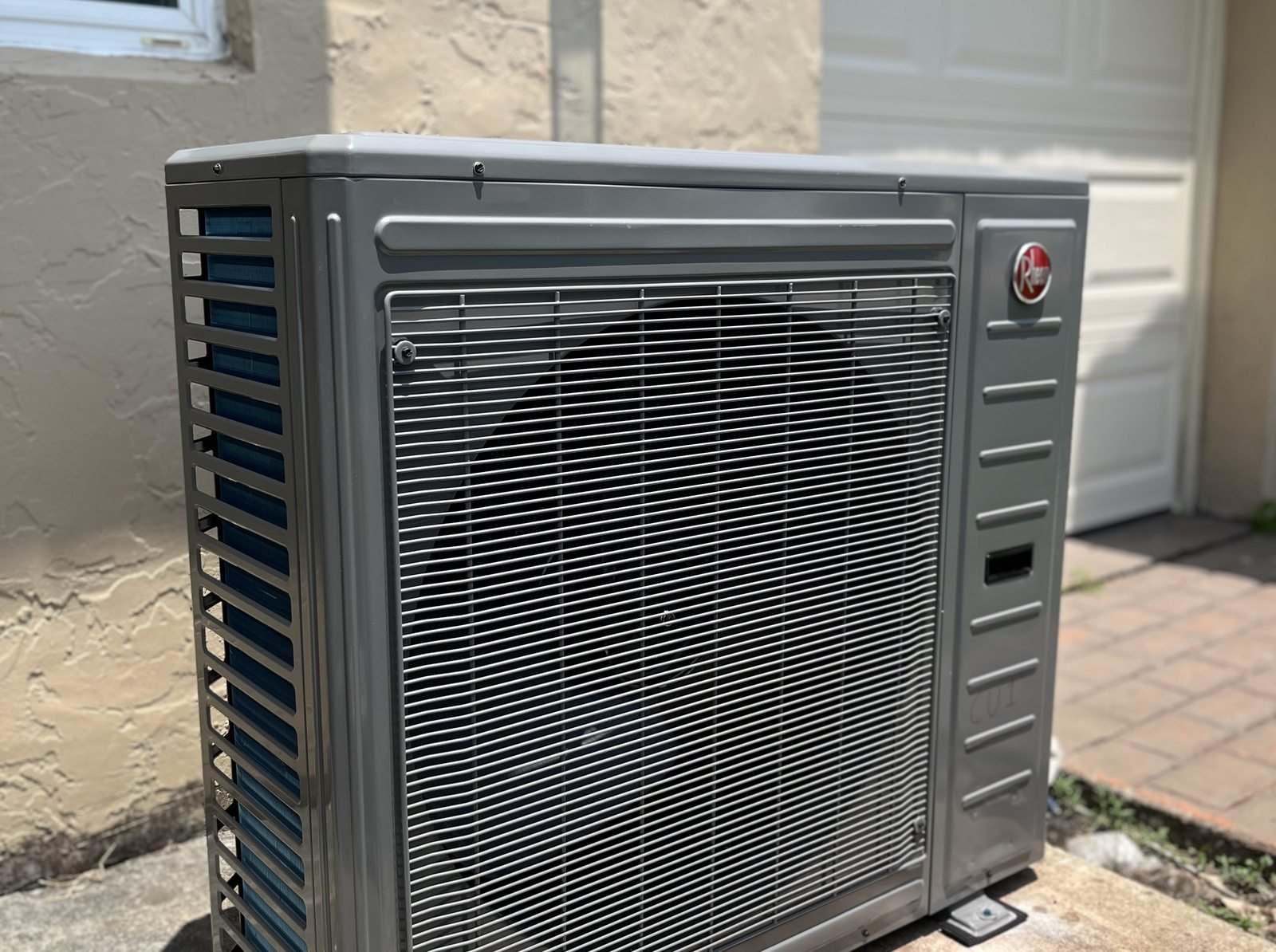
What actually kills systems here
- Salt-air corrosion. Within a few miles of the water, salt attacks condenser coils, fan motors and electrical contacts. It is the single biggest lifespan difference between a Fort Lauderdale beachfront condo and an identical unit in Weston.
- Run hours. Compressors have a finite number of starts and hours in them. Ours simply get used up faster.
- Deferred maintenance. A dirty condenser coil raises head pressure, which raises compressor current, which shortens compressor life. It is a slow, invisible tax that ends in a large bill.
- Bad sizing from day one. An oversized system short cycles, and every start is harder on a compressor than the running time is. Undersized systems run flat out and never get a break. Both die early.
- Storm and flood exposure. Debris impact, wind-driven salt and standing water around a ground-mounted condenser all take their toll.
What genuinely extends it
None of this is exotic:
- Rinse the condenser coil. On a coastal property this matters more than any other single thing. Salt does not wash off by itself.
- Service on a schedule. Coil cleaning, drain flush, charge verification, electrical checks and current readings trended over time. The point of trending is that a compressor drawing more amps each year is telling you something a year in advance.
- Change the filter. Dull advice, real effect on airflow and coil temperature.
- Coastal-rated equipment. If you are near the water, coil coatings and corrosion-resistant hardware are worth the premium. The price difference is a fraction of a premature replacement.
- Correct sizing at replacement. Sized from a load calculation, not from the label on the old unit — which may itself have been wrong for twenty years.
The signs the end is near
One of these on its own is not a verdict. Three or more usually is:
- Age past ten years and a major component failure — compressor, coil or a significant leak
- Repairs becoming an annual event rather than an occasional one
- Rising bills with no change in habits or occupancy
- Rooms that no longer reach setpoint on the hottest afternoons
- The house feeling humid even when the temperature is right
- An older refrigerant that is now expensive and getting harder to source
Repair or replace: the practical test
A useful rule of thumb: if the repair costs more than a third of a replacement and the unit is past ten years, replacement is usually the better value. If it is under five years old, repair almost always wins. Between those, it comes down to what failed, what the efficiency gap looks like, and how much longer you plan to be in the house.
What should never decide it is a scare in your kitchen. Ask for the measured readings, ask what specifically failed, and ask for both options priced in writing. Any contractor unwilling to give you that is telling you something useful about themselves.
Frequently Asked Questions
How long should an AC last in South Florida?
Realistically about 10 to 15 years for an inland home with regular maintenance, and often toward the lower end near the coast. The commonly quoted 15 to 20 years comes from climates where systems sit idle for months; ours run close to year-round and accumulate run hours far faster.
Does salt air really shorten AC life?
Yes, measurably. Within a few miles of the water, salt corrodes condenser coils, fan motors and electrical contacts. Regular coil rinsing and coastal-rated equipment with coil coatings are the two things that make the biggest difference.
When is it better to replace instead of repair?
A practical guide: if the repair costs more than about a third of a replacement and the unit is past ten years, replacement usually wins. Under five years old, repair almost always wins. In between, it depends on what failed, the efficiency gap and how long you plan to stay.
Does maintenance actually extend the life of an AC?
It does, mostly by keeping the condenser coil clean and the charge correct. A fouled coil raises head pressure and compressor current continuously, which shortens compressor life — and trended readings give you roughly a year of warning before a failure.
Is a more expensive system going to last longer here?
Not automatically, but coastal-rated equipment with coil coatings and corrosion-resistant hardware genuinely lasts longer near the water. Correct sizing and regular service affect lifespan more than brand does.
Wondering If Yours Is Near the End?
We will tell you honestly whether to repair it or replace it — with the numbers in writing.
- ✔ Free, No-Obligation Estimate
- ✔ Upfront Written Pricing — No Surprises
- ✔ 10-Yr Parts / 1-Yr Labor Warranty
- ✔ Serving Miami-Dade, Broward & Palm Beach
Prefer to talk? Call (305) 846-0155.